Władysław Bukowiński
A Polish priest nicknamed the "Apostle of Kazakhstan," he spent many years in Soviet gulags and dedicated his life to clandestine apostolate among the deportees.
Contemporaries

Figures and markers around the normalized period for this entry.
Guided reading
5 reading sections
Biography
Birth in Ukraine, studies in Krakow, and priestly ordination.
Władysław Bukowiński was born on December 22, 1904, in Berdychiv (today in Ukraine, then in the Russian Empire) into a Polish Catholic family of landowners. His father, Cyprian Józef Bukowiński, was an agricultural engineer, and his mother, Hedwige Scipio del Campo, came from a noble family of Italian origin established in Poland. After his mother's death in 1918 and faced with the threat of the Bolshevik invasion in 1920, the family took refuge in Poland. The young Władysław continued his studies in Krakow. In 1926, he obtained a law degree and a diploma from the Polish School of Political Science at the Jagiellonian University. Feeling the call to the priesthood, he entered the Krakow seminary the same year. He was ordained a priest on June 28, 1931, by the Archbishop of Krakow, Mgr Adam Stefan Sapieha. He first exercised his ministry as a vicar and catechist in Rabka (1931-1935) and then in Sucha Beskidzka (1935-1936).
Life and Work
Ministry in Lutsk, arrests by the NKVD, deportation to the Gulags, and clandestine apostolate in Kazakhstan.
In August 1936, desiring to serve in the eastern regions of Poland (the Kresy), Father Bukowiński requested a transfer to the Diocese of Lutsk (Łuck, now in Ukraine). There, he taught catechism and sociology at the diocesan seminary and was actively involved in Catholic Action. In September 1939, at the beginning of the Second World War, he was appointed pastor of the Lutsk Cathedral.
After the Soviet invasion, he was arrested for the first time by the NKVD on August 22, 1940, and sentenced to eight years of forced labor. In June 1941, during the German offensive, the Soviets began massacring prisoners. On June 23, 1941, Father Bukowiński miraculously escaped mass execution at the Lutsk prison. During the German occupation, he courageously resumed his ministry, helping the poor, prisoners of war, and protecting Jewish children.
On January 3, 1945, after the return of the Red Army, he was arrested again along with other priests. Sentenced to ten years in a labor camp, he spent nearly a decade in the Soviet Gulags (notably in Kiev, Bakal, Chelyabinsk, and Jezkazgan in Kazakhstan). Despite extreme detention conditions and forced labor in copper mines, he celebrated Mass clandestinely at dawn, heard confessions, preached retreats, and made a rosary out of breadcrumbs.
Released in 1954, he was exiled to Karaganda, Kazakhstan. He worked there officially as a night watchman while conducting an intense clandestine apostolate among the deported Poles, Germans, and people of other nationalities. In 1955, having the opportunity to return to Poland, he heroically refused so as not to abandon the faithful who were deprived of priests. He chose to take Soviet citizenship in order to remain legally in the area.
Arrested a third time on December 3, 1958, for his religious activity, he was sentenced to three years in a labor camp in Irkutsk (Siberia). Released in 1961, he returned to Karaganda and continued his clandestine pastoral visits, traveling throughout Kazakhstan and other Central Asian republics (Tajikistan, Kyrgyzstan).
Path to Holiness
End of life in Karaganda, meetings with Karol Wojtyła, and death in 1974.
Despite health deeply impaired by thirteen years of imprisonment and forced labor, Father Bukowiński continued his ministry until exhaustion. He made three brief stays in Poland (in 1965, 1969, and 1972-1973) to receive medical treatment. It was during these trips that he met several times with Cardinal Karol Wojtyła (the future Pope John Paul II), who deeply admired his apostolic zeal and fidelity. Returning to Karaganda, his health declined rapidly due to diabetes. On November 25, 1974, he celebrated his last Mass before being hospitalized. He passed away peacefully on December 3, 1974, in Karaganda, with a rosary in his hand. His funeral gathered a huge crowd of faithful from various denominations, constituting one of the largest religious demonstrations of the Soviet era.
Beatification and canonization
Introduction of the cause, recognition of heroic virtues, approval of a miracle, and beatification in 2016.
The cause for beatification was introduced in Krakow in 2006, following the transfer of jurisdiction from the Diocese of Karaganda. On January 22, 2015, Pope Francis authorized the promulgation of the decree recognizing the heroic nature of his virtues, declaring him Venerable. On December 14, 2015, Pope Francis approved a miracle attributed to his intercession, concerning the scientifically inexplicable healing of a priest. The beatification ceremony was celebrated on September 11, 2016, at the Cathedral of Our Lady of Fatima in Karaganda. It was presided over by Cardinal Angelo Amato, Prefect of the Congregation for the Causes of Saints, as the legate of Pope Francis. This was the very first beatification celebrated on the soil of Kazakhstan.
Spirituality and legacy
Nicknamed the "Apostle of Kazakhstan," he leaves a legacy of absolute trust in Divine Providence.
Nicknamed the "Apostle of Kazakhstan," Blessed Władysław Bukowiński embodied absolute trust in Divine Providence in the heart of the worst totalitarian persecutions. His spirituality was deeply Eucharistic and Marian, symbolized by his rosary made of bread fashioned in the Gulag. He lived his priesthood not to preserve himself, but to give his life for Christ's flock, refusing the comfort of a return to his homeland to remain with the exiles and the persecuted. His legacy remains alive in Kazakhstan, where he is venerated as the father of the contemporary local Church. His relics rest today in the Cathedral of Our Lady of Fatima in Karaganda.
Iconography
Signs and attributes
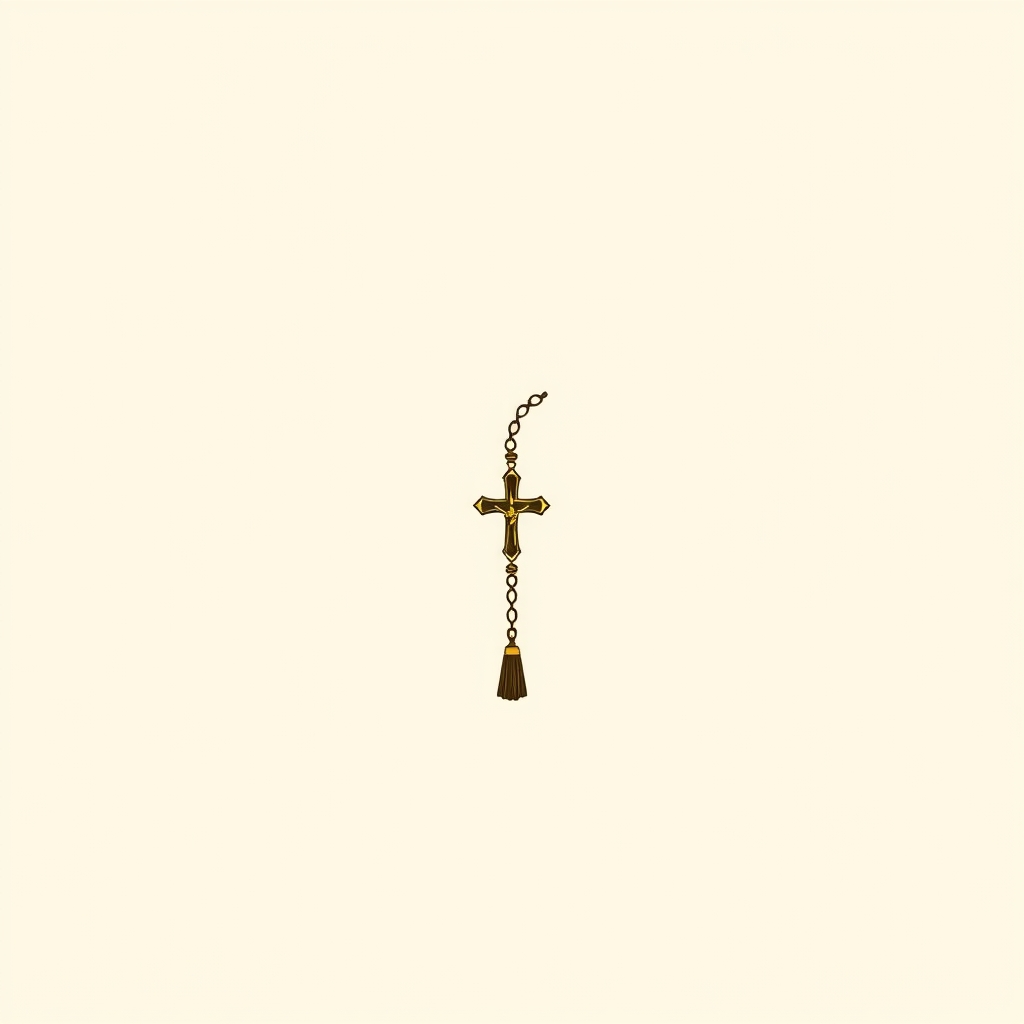
Frequently asked questions about Władysław Bukowiński
Who was Władysław Bukowiński?
A Polish priest nicknamed the "Apostle of Kazakhstan," he spent many years in Soviet gulags and dedicated his life to clandestine apostolate among the deportees.
How is Władysław Bukowiński depicted in Christian art?
In iconography, Władysław Bukowiński is recognizable by: Rosary and Bread rosary.
Which saints were contemporaries of Władysław Bukowiński?
Contemporaries include: Pauline of the Agonizing Heart of Jesus, Felipe de Jesús Munárriz and 50 companions, Mariano de Jesús Euse Hoyos and Teresa of Jesus of the Andes.
When did Władysław Bukowiński die?
Władysław Bukowiński died around 1974.
What are the other names of Władysław Bukowiński?
Other forms of the name: Wladyslaw Bukowinski.
Who are the relatives of Władysław Bukowiński?
Relatives of Władysław Bukowiński: Cyprien Józef Bukowiński (father) and Hedwige Scipio del Campo (mother).
Annexes & related entities
Structured data for exploration: events, miracles, quotes, places, attributes, patronages, and important entities cited in the text.
Key Events
- Era / death: 1974
- Beatification in 2016 by Francis