Victoriano Gondra Muruaga
Victoriano Gondra Muruaga, known as Aita Patxi (1910-1974), was a Spanish Passionist priest and military chaplain during the Civil War, recognized for his heroic dedication to prisoners.
Contemporaries

Figures and markers around the normalized period for this entry.
Guided reading
5 reading sections
Biography
Youth and religious formation of Victoriano Gondra Muruaga within the Congregation of the Passion.
Victoriano Gondra Muruaga, known in religion as Francisco de la Pasión (Francis of the Passion) and affectionately nicknamed Aita Patxi (Father Francis in the Basque language), was born on March 5, 1910, in Líbano de Arrieta, in the province of Biscay, Spain. Coming from a large family of modest and deeply Christian farmers, he was baptized the day after his birth. He received his primary education at the public school in his native village.
Attracted very early to religious life, notably under the influence of popular missions preached by the Passionist fathers, he entered at the age of 12 the apostolic school (minor seminary) of the Congregation of the Passion of Jesus Christ in Gabiria, in the province of Gipuzkoa. He continued his journey by entering the novitiate of Our Lady of Angosto, in Álava, thus following in the footsteps of one of his brothers already engaged in the congregation. After pronouncing his religious vows and completing his ecclesiastical studies, he was ordained a priest on September 22, 1935.
Life and Work
Military chaplaincy during the Spanish Civil War, captivity, and pastoral dedication.
When the Spanish Civil War broke out in 1936, Father Francisco was mobilized as a military chaplain to accompany the Basque soldiers (the gudaris). It was at this time that he began to be called "Aita Patxi." Appointed chaplain of the Rebelión de la Sal battalion, he traveled along the front lines with a portable altar contained in a 27-kilo suitcase, while imposing strict fasts upon himself. Although close to the Catholic Basque nationalists, he deployed his pastoral zeal among all combatants without distinction, including the socialist and communist soldiers of the Rosa Luxemburgo or Amuátegui battalions. He was notably a witness to the bombing of Guernica in April 1937.
In June 1937, during the fall of the Iron Belt of Bilbao, he was taken prisoner by a Carlist priest from the opposing side. Refusing to claim his status as a chaplain or officer to escape forced labor, he shared the fate of ordinary prisoners. He was first interned at the Carmelite convent in Vitoria, then transferred to the San Pedro de Cardeña concentration camp, near Burgos, before being sent to the Madrid front (at Carabanchel, Brunete, and Jarama) to perform forced labor.
It was during this captivity that Aita Patxi performed acts of heroism comparable to those of Saint Maximilian Kolbe: - In July 1937, at San Pedro de Cardeña: An Asturian communist prisoner, Esteban Plágaro, a father, attempted to escape but was recaptured and sentenced to death. Aita Patxi offered to be shot in his place. Although the camp commander seemed to initially accept the exchange and Aita Patxi was placed before the firing squad, smiling at the thought of giving his life, the officer in charge of the execution, moved, ordered him to withdraw. The Asturian prisoner was finally executed the next day, plunging the religious into deep sorrow. - In 1938, at Carabanchel (Madrid): Following the escape of several Republican prisoners, the authorities decided to shoot five hostages chosen by lottery as a reprisal. To prevent this massacre, Aita Patxi voluntarily inserted himself into the line of the condemned and refused to leave until the execution order was revoked. His courageous gesture bore fruit and the execution was canceled.
Released on August 27, 1939, he returned to Deusto (Bilbao). At the request of his superiors and the president of the Basque government in exile, José Antonio Aguirre, he wrote his war memoirs. He devoted the rest of his life to pastoral ministry, distinguishing himself by his absolute dedication to the sick, the elderly, and the excluded in the hospitals of Bilbao, particularly at the Basurto Hospital.
Path to holiness
Introduction and stages of the cause for canonization of Aita Patxi.
The reputation for holiness of Aita Patxi, already firmly established during his lifetime among prisoners and the faithful, spread rapidly after his death. On September 12, 1989, the Congregation for the Causes of Saints granted the nihil obstat for the opening of his cause for canonization. The diocesan inquiry was officially opened by the Diocese of Bilbao on November 15, 1989, and concluded on June 14, 1990. The validity of this inquiry was recognized by a Roman decree on January 15, 1993.
Beatification and canonization
Recognition of the heroic nature of his virtues by Pope Benedict XVI in 2008.
After the examination of the Positio by the theological consultants and the cardinals of the Congregation for the Causes of Saints, Pope Benedict XVI authorized, on March 15, 2008, the promulgation of the decree recognizing the heroic nature of his virtues. Victoriano Gondra Muruaga was then declared venerable. For his beatification to be pronounced, the official recognition of a miracle attributed to his intercession is required.
Spirituality and legacy
Passionist spirituality centered on the Passion of Christ and a legacy of reconciliation.
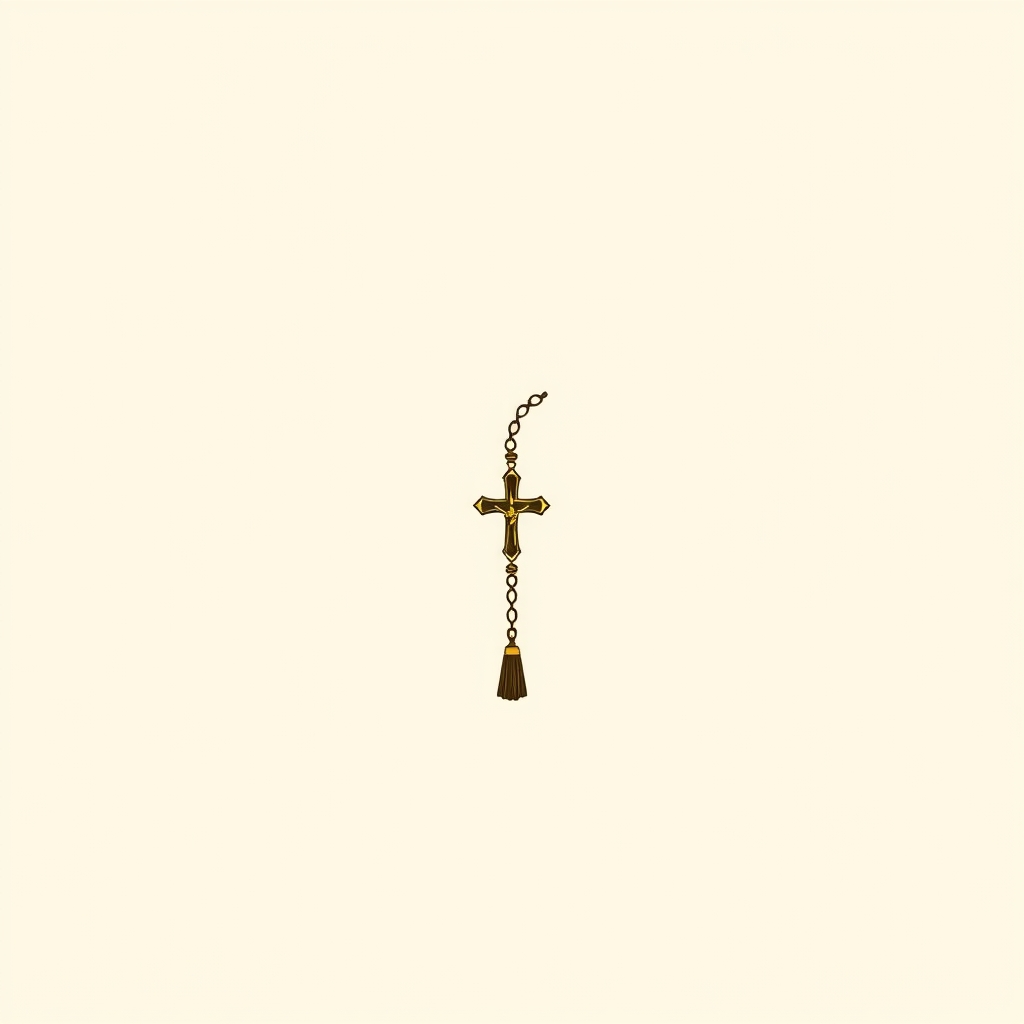
The spirituality of Aita Patxi is deeply rooted in the Passionist charism, centered on the contemplation of the Passion of Christ as the supreme expression of God's love. His life bears witness to an intense Eucharistic faith and a constant devotion to the Rosary, which he recited tirelessly. His legacy lies in his example of universal charity and reconciliation in times of war: he was able to transcend ideological and political divisions to become the servant and protector of all, whether they were fervent Catholics or atheist communist militants. He remains a luminous figure of peace and self-giving at the heart of one of the most painful conflicts of the 20th century.
Iconography
Signs and attributes
Frequently asked questions about Victoriano Gondra Muruaga
Who was Victoriano Gondra Muruaga?
Victoriano Gondra Muruaga, known as Aita Patxi (1910-1974), was a Spanish Passionist priest and military chaplain during the Civil War, recognized for his heroic dedication to prisoners.
How is Victoriano Gondra Muruaga depicted in Christian art?
In iconography, Victoriano Gondra Muruaga is recognizable by: rosary and portable altar.
Which saints were contemporaries of Victoriano Gondra Muruaga?
Contemporaries include: Pauline of the Agonizing Heart of Jesus, Felipe de Jesús Munárriz and 50 companions, Mariano de Jesús Euse Hoyos and Teresa of Jesus of the Andes.
When did Victoriano Gondra Muruaga die?
Victoriano Gondra Muruaga died around 1910.
What are the other names of Victoriano Gondra Muruaga?
Other forms of the name: Francisco de la Pasión, Aita Patxi and François de la Passion.
Annexes & related entities
Structured data for exploration: events, miracles, quotes, places, attributes, patronages, and important entities cited in the text.
Key Events
- Era / death: 1910-1974
- Decree of venerability by Benedict XVI